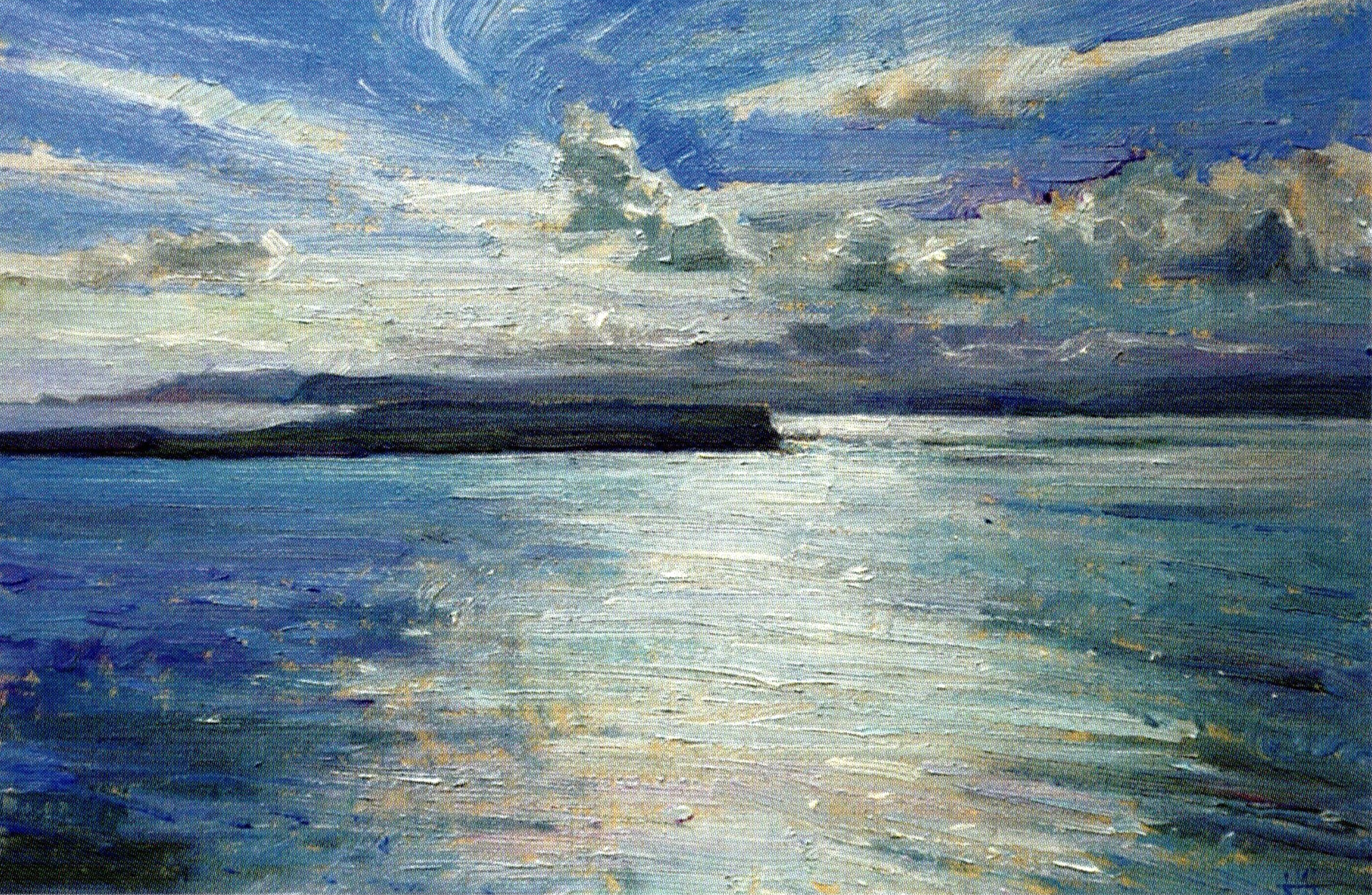
Rathlin, on top of three-hundred-foot basalt cliffs and looking north to the Hebrides and south into the mouth of the Irish Sea has for centuries been a back-drop to other people's stories. Columba left from Rathlin to make his home in Iona. A raid on Rathlin began Ireland's Viking Age. Robert Bruce's arachnidal inspiration occurred in a Rathlin cave, Rathlin stood an unlucky square on the chessboard of the Lords of the Isles' wars with the O'Neills and Campbells, was the location of Marconi's first commercial radio broadcast and the location of Richard Branson's balloon crash rescue. In a way the island will always be a bit of a backdrop, a destination for every visitor's story. Your trip to Rathlin is an adventure - you wait on a pier in Ballycastle, you may travel through rough waters, you experience shelter as Rue Point stretches to protect you, you watch the port's life come into focus as the boat docks. The port's life may well comprise only a cat, the wind and a couple of inquisitive seals, yet it's all part of the back-drop to your particular story.
The island, and the islanders, inhabitants of Northern Ireland's only populated island, are more than just a back-drop for history and other people's stories. Their change is constant, forging strong links with other island communities on the west coasts of Scotland and Ireland. Some family members emigrate, some stay - many return to the island when their own children have grown up elsewhere. New blood arrives. In turn, some children leave to become pilots, teachers, musicians, executives - others stay on the island and have created a vigorous, enthusiastic and far-seeing community association which guides island life with the confidence of their grandfathers' steering small boats through rough Moyle waters.
On a different level, the island itself is constantly changing. At first, it's easy to think that the shift in the seas, the break of clouds across the island's valleys and lakes, the storms moving across island horizons are phenomena put on especially for the visitor's own therapy. I've experienced first-hand for thirty years the joy of fleeing work in London and Belfast to sanctuary in Rathlin - this lawyer has direct experience of Ralph Waldo Emerson's remark in Nature that: "the tradesman, the attorney comes out of the din and craft of the street, and sees the sky and the woods, and is a man again. In their eternal calm, he finds himself. The health of the eye seems to demand a horizon. We are never tired, so long as we can see far enough". But, particularly in the many stretches of the island where the visitor can walk for hours alone -along the cliff-tops of Rue Point at sunset, or through the great gulfs of warm bracken in the eastside's shelter of Maddygalla and Doon Point, or down the hidden cliff-path to the turquoise waters of Cooraghy pier - there comes a point where you suddenly understand that it's not about you. Instead, you're only the witness - you're no more than the background to what's happening in nature. The beauty in all of the island's many scenes, it's going to happen, with or without you: the breeze is going to ruffle the water of the small, golden loughs in the hills above Brockley, whether you're there or not.
This sudden sense of learning to witness is inherent to any time spent with Kenny McKendry. In a glorious twenty-four-hour period spent with Kenny on the island last summer, you just sat back and let things happen to you: chopping up a fallen tree. A long lunch with the parish priest, listening to his tales of his youth as a cleric flying aid into Biafra and, ultimately, a Nigerian prison. An afternoon scrambling to the scratchy heights of Princess Taise's Dun Mòr, before plunging down to the cliff-top gap of the Hollow of the Englishmen. A slow drive to Kebble Lough in the west, to pay homage to a Viking burial mound. Falling in with a youthful team of RSPB workers to join a curragh race across an impossibly still summer evening sea. The last couple of pints sitting out under the stars at McCuaig's Bar, listening to the lights clinking in the harbour. Kenny's great gift, in his life as in his painted work, is to teach you how to see beyond the close-up of the mundane to understand the landscape of what's happening to you. Emerson again: "The charming landscape which I saw this morning is indubitably made up of some twenty or thirty farms. But none of them owns the landscape. There is a property in the horizon which no man has but he whose eye can integrate all the parts, that is, the poet". Kenny's property in the horizon shines through this exhibition.
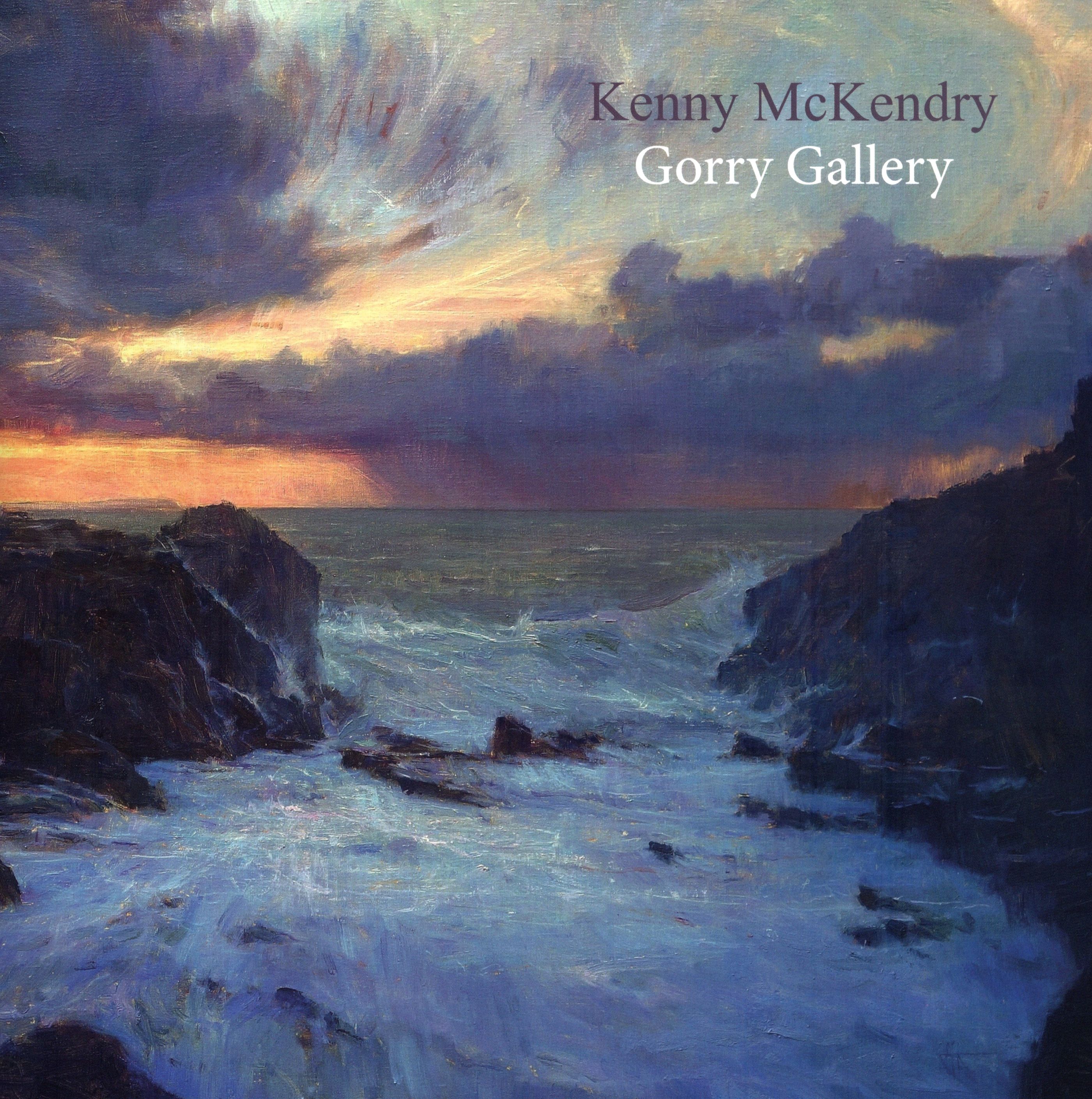
In Dusk and Heavy Seas, Rue Point, Kenny places you squarely in the middle of the drama of the swelling sea, which has grown along the northern coast of Ireland ever since its arrival from the Atlantic, until it breaks and surges back against the long basalt cliffs of the island's southward leg. In Golden Afternoon, Ally Lough where the magical colours of the waters of Lower Lough Ally make you realise the weirdness of these beautiful, peaceful stretches of lakeland lying hundreds of yards above seas constantly roiling in eastwards from the Atlantic, north from the Irish Sea and southwards through the breaks and gaps in the Hebrides. In Afternoon Shadows Below Bruce's Castle, where the sunlit higher rises of the cliff cutting you off from the next bay (and the light blue fleck of the sea just the other side of the rock facing you) tempt you into the perennial Rathlin trap of taking just a few more steps to explore. Whether you are lucky enough to see Kenny's work in the Gorry Gallery's superb exhibition, or via Kenny's own website, and if (as I hope) you one day come to this beautiful, living, ever-changing island yourself, welcome to learning the beauty of witnessing.
Rory Campbell